
Apigee Anti-Patterns
Here in this blog, we will learn about Anti-Patterns in Apigee.
Apigee is a powerful API management platform, but like any flexible technology, it allows practices that can unintentionally harm performance or reliability. These poor practices are known as anti-patterns—design choices that are technically possible yet counterproductive. Recognizing them early is essential for building stable and scalable APIs
Anti-Patterns of Apigee
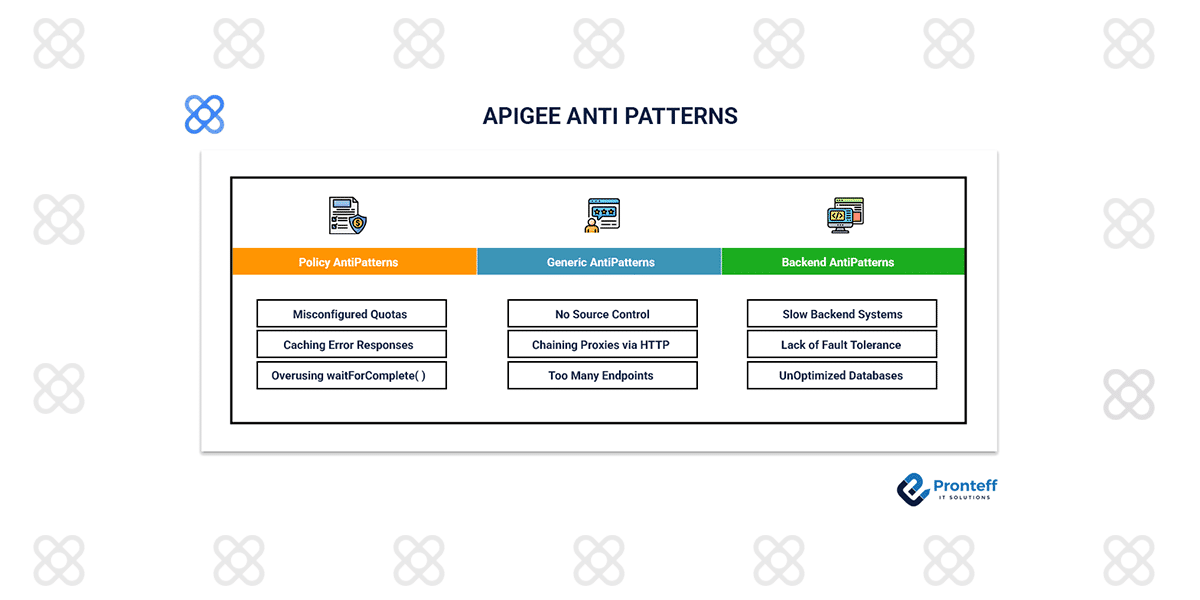
Apigee anti-patterns generally fall into three groups: policy, generic, and backend. Policy anti-patterns occur when individual policies are misused. For example, using waitForComplete() in JavaScript blocks execution threads and can trigger 500 errors under load. Similarly, setting a very long OAuth token expiry leads to massive token accumulation in Cassandra, increasing disk usage. Even something as simple as greedy regular expressions in threat-protection policies can cause high latency and CPU spikes.
Another frequent mistake is caching error responses. While caching improves speed, storing failures means users may continue receiving errors even after the backend issue is fixed. Large cache entries above 256 KB also hurt performance because they remain only in the in-memory L1 cache and force repeated backend calls.
Generic anti-patterns relate to architecture. Calling one proxy from another through HTTP instead of proxy chaining adds unnecessary network hops. Managing resources only through the Apigee UI without source control risks permanent data loss and makes auditing impossible.
Backend anti-patterns focus on how Apigee interacts with target services. A slow or undersized backend increases timeouts and ruins user experience. Disabling HTTP keep-alive forces new connections for every request, adding SSL overhead and exhausting connection pools.
The best approach is prevention: design with distributed quotas, use proper caching rules, maintain SCM pipelines, and ensure backends are tuned for persistent connections. Treating Apigee as an enterprise platform rather than a quick integration tool ensures APIs remain reliable, secure, and efficient