
Building AI-RAN Solution with NVIDIA Aerial and Red Hat OpenShift
In this blog, we will learn how to build an AI-RAN solution with NVIDIA Aerial and Red Hat OpenShift.
The telecommunications landscape is undergoing a significant transformation as Radio Access Networks (RAN) evolve from hardware-centric systems into flexible, software-driven platforms. Built on cloud-native architectures, modern RAN environments are laying the groundwork for the AI-powered 6G era. By embedding artificial intelligence into wireless networks, service providers can optimize operations, lower energy consumption, and create new business opportunities through intelligent edge services.
As part of this ongoing evolution, Red Hat has successfully validated the newly open-sourced NVIDIA Aerial CUDA-Accelerated RAN software stack running on Red Hat OpenShift. This achievement combines NVIDIA’s accelerated computing capabilities with OpenShift’s enterprise Kubernetes platform, enabling partners and developers to accelerate the creation, testing, and deployment of next-generation AI-RAN solutions using open source technologies.
Why Open Source Matters for 5G and Future 6G Networks
Building telecommunications infrastructure on open, cloud-native platforms provides several strategic benefits for operators and technology providers.
Greater Visibility and Security
Open source software offers transparency into the underlying codebase, enabling organizations to perform security reviews, audits, and validations more effectively. This visibility helps establish trust in mission-critical network environments.
Faster Innovation Cycles
By making the Aerial software stack openly available, NVIDIA empowers developers, researchers, and ecosystem partners to experiment, customize, and optimize RAN technologies. This collaborative model accelerates innovation and encourages the development of advanced wireless solutions.
Software-Driven Flexibility
A cloud-native RAN architecture enables new capabilities to be introduced through software updates rather than expensive hardware refreshes. This approach reduces operational costs while allowing operators to adapt quickly to evolving business and technology requirements.
Broad Ecosystem Integration
Red Hat OpenShift supports a diverse ecosystem of validated partners and technologies. This flexibility allows service providers to integrate best-of-breed solutions, reduce vendor lock-in, and build resilient network infrastructures that support future growth.
Support for Emerging Hardware Platforms
The platform leverages existing support within Red Hat Enterprise Linux (RHEL) and OpenShift for NVIDIA GPUs and ARM-based architectures. This foundation simplifies the adoption of future hardware innovations and next-generation AI infrastructure.
Demonstrating Performance at the Edge
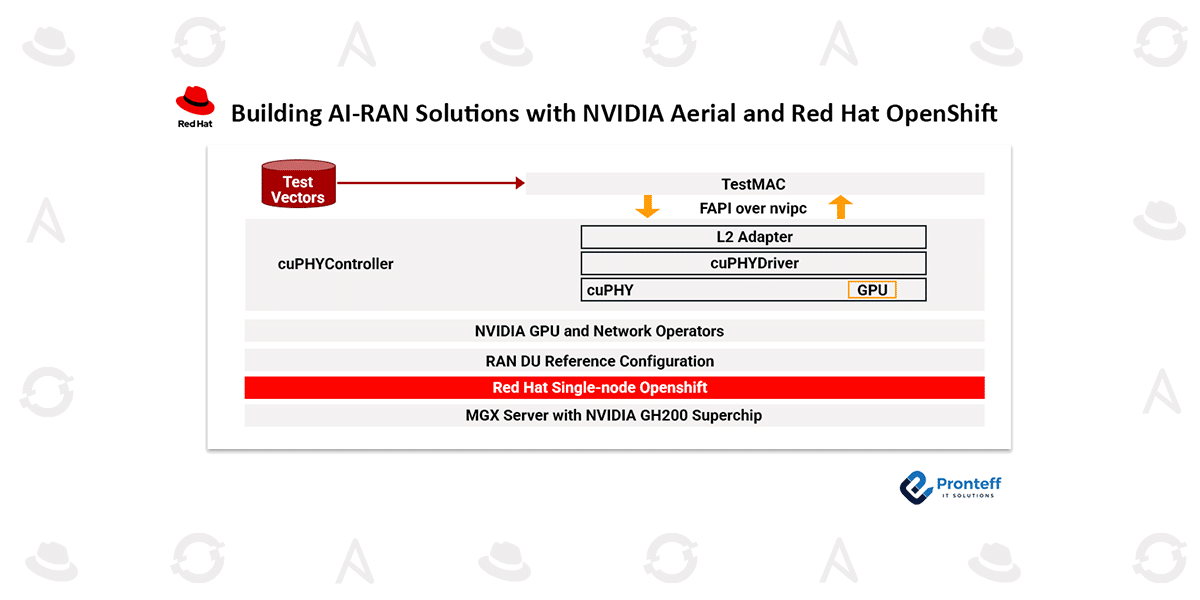
To validate the suitability of this architecture for carrier-grade deployments, Red Hat tested the NVIDIA Aerial CUDA-Accelerated RAN stack in an optimized edge computing environment.
The deployment included:
- Single-Node OpenShift (SNO): A lightweight OpenShift configuration designed for edge and far-edge locations.
- Zero-Touch Provisioning (ZTP): Automated deployment and configuration using GitOps methodologies, enabling efficient management of remote infrastructure.
- RAN Distributed Unit (DU) Reference Architecture: Tuned to support the stringent latency and real-time processing requirements of distributed RAN workloads.
The solution was deployed on an NVIDIA MGX platform powered by the NVIDIA GH200 Grace Hopper Superchip and integrated with an NVIDIA ConnectX-7 network interface card. This configuration highlights the synergy between advanced AI hardware and cloud-native telecommunications platforms.
Verifying NVIDIA Aerial on OpenShift
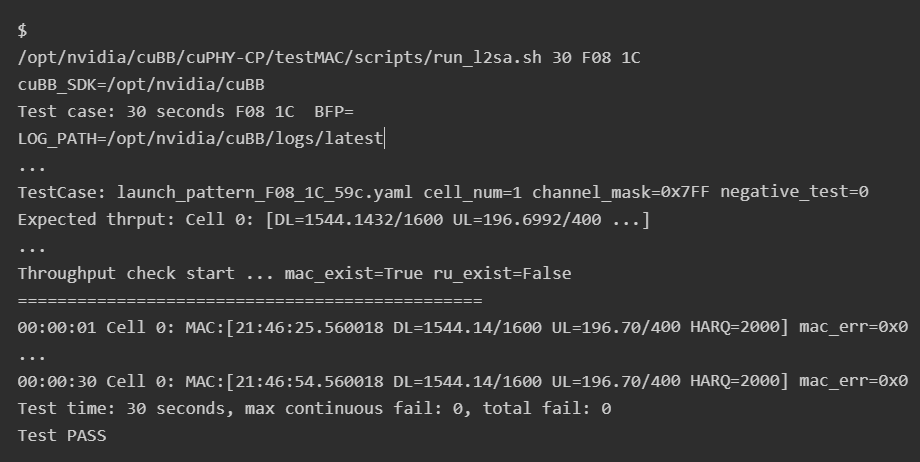
The validation environment successfully executed the cuPHY component, NVIDIA’s GPU-accelerated physical layer implementation within the Aerial RAN framework. Testing confirmed the successful integration of the Layer 1 (L1) physical layer with a simulated Layer 2 (L2) MAC scheduler, demonstrating the feasibility of running high-performance RAN workloads on OpenShift.
Paving the Way for AI-RAN
The collaboration between Red Hat and NVIDIA illustrates a practical path toward the future of intelligent telecommunications networks. By combining OpenShift’s cloud-native flexibility with NVIDIA’s accelerated computing technologies, service providers can build multi-tenant platforms capable of simultaneously supporting RAN functions and AI-driven applications.
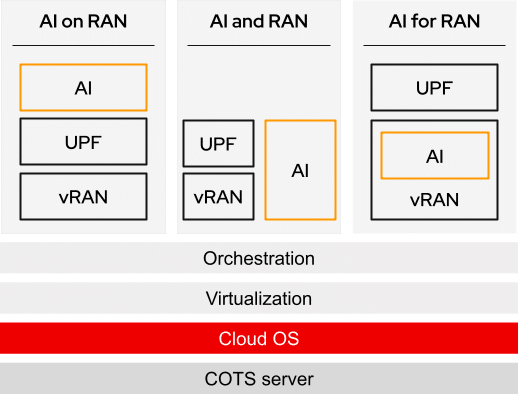
This approach aligns with the three core dimensions of AI-RAN:
- AI for RAN: Applying AI technologies to improve network efficiency, performance, and automation.
- AI and RAN: Running AI and RAN workloads together on a shared cloud-native infrastructure.
- AI on RAN: Delivering AI-powered services at the network edge through RAN deployments.
As AI-RAN adoption progresses from research and trials toward commercial deployment, Red Hat and NVIDIA remain committed to delivering the open platforms, tools, and ecosystem support needed to create more intelligent, efficient, and scalable wireless networks.