
Channel Triggering in IBM MQ
In this blog, we will learn about channel triggering in IBM MQ.
Introduction
Channel triggering in IBM MQ is a mechanism that allows communication channels to start automatically when messages arrive in a queue. Instead of running channels continuously, IBM MQ activates them only when there is work to be done. This improves efficiency and helps reduce unnecessary consumption of system resources.
In a typical messaging environment, applications place messages onto queues. These messages may need to be transferred to another queue manager using a message channel. Without triggering, administrators would need to start channels manually or keep them running all the time. Channel triggering removes this requirement by automatically initiating the channel when certain predefined conditions are satisfied.
Triggering Process
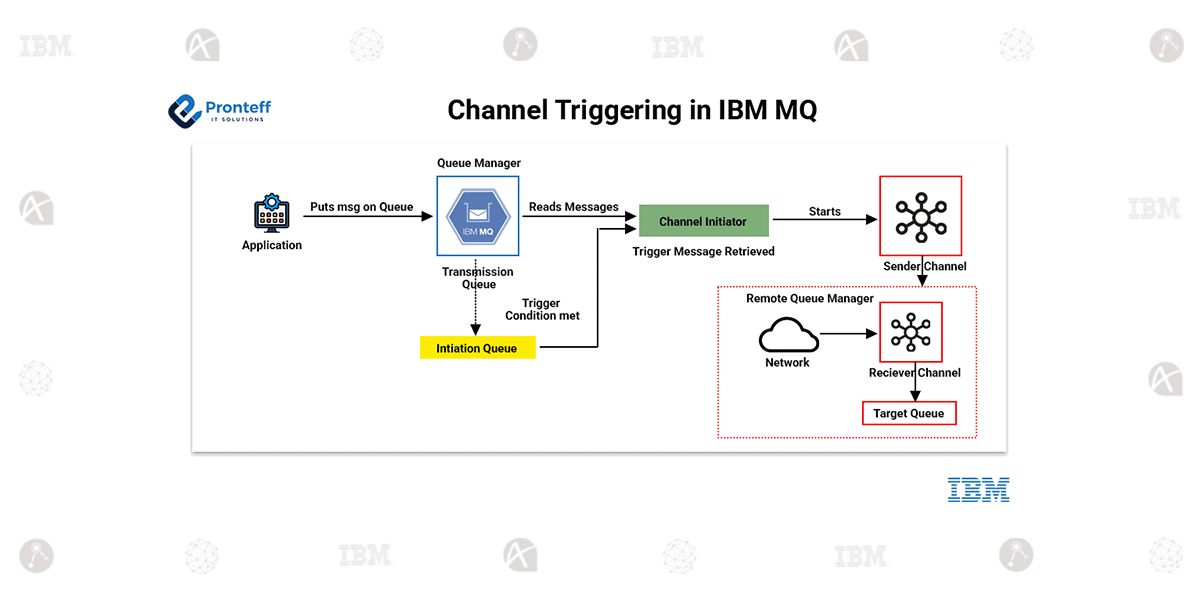
The triggering process begins when a message is placed on a transmission queue. A transmission queue temporarily stores messages that must be delivered to a remote queue manager. When triggering is enabled on this queue, the queue manager continuously checks whether the configured trigger conditions are met. If the conditions are satisfied, the queue manager generates a special control message known as a trigger message.
This trigger message is not processed like a normal application message. Instead, it contains instructions that indicate which channel should be started. The trigger message is placed on an initiation queue, which acts as a holding area for these control messages.
Channel Initiator
A background component called the channel initiator constantly monitors the initiation queue. When a trigger message appears in this queue, the channel initiator reads the information contained in the message. Based on the details provided, it starts the required Message Channel Agent (MCA). The MCA is responsible for managing the communication channel between queue managers.
Once the channel starts, it begins transferring messages from the transmission queue to the destination queue manager. After all messages are successfully sent, the channel may stop automatically depending on its configuration.
Advantages of Channel Triggering
Channel triggering provides several benefits in an IBM MQ environment. It automates the process of starting channels, which reduces manual intervention from administrators. It also improves system efficiency because channels are activated only when messages are available for transmission. Additionally, triggering helps optimize resource utilization since system processes do not need to run continuously.
Conclusion
Overall, channel triggering is an important feature in IBM MQ that supports automated message flow between queue managers. By ensuring that channels start only when required, it helps maintain efficient and reliable message delivery across distributed systems.