
In this blog, we will learn how to build APIs Faster & Smarter with IBM API Connect API Studio
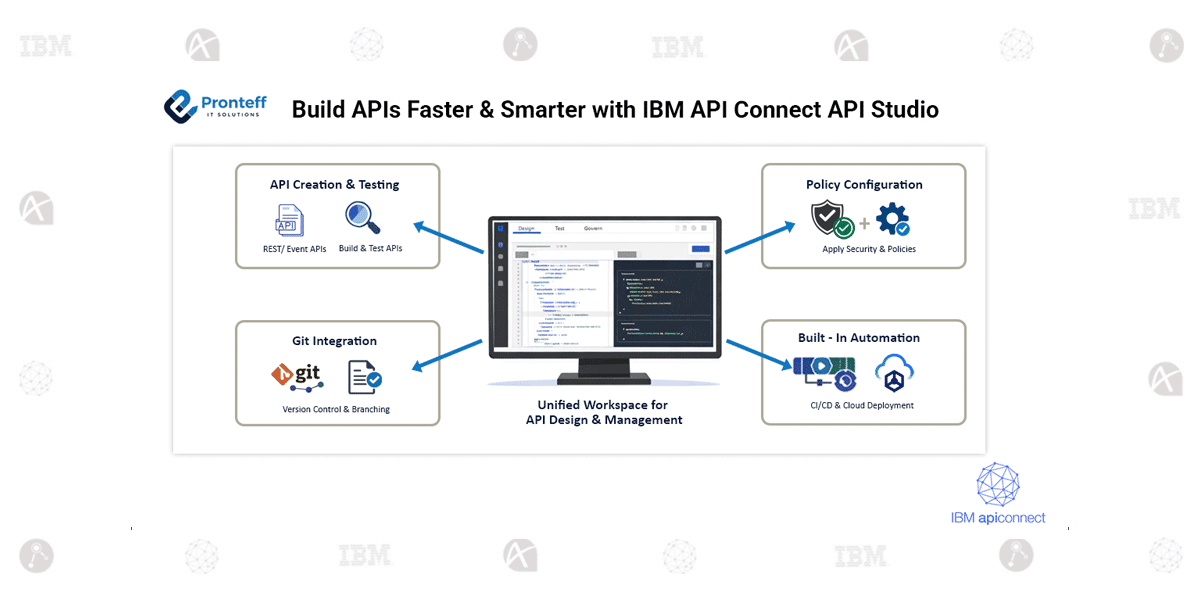
In practice, API Studio is where most of the actual API work happens now. You can design your APIs, plug in policies, test endpoints, and handle things like versioning or publishing without leaving the interface. It supports both REST and event-driven APIs, and the built-in testing is honestly one of the more useful parts—you don’t have to keep switching to Postman or something similar just to validate changes.
The Git integration is another thing that makes a difference, especially in team setups. Since API definitions can be treated like code, you can manage branches, track changes, and plug everything into CI/CD pipelines. That makes collaboration cleaner and avoids a lot of the usual confusion when multiple people are working on the same APIs.
Feature-wise, it covers what you’d expect: a single design interface, policy configuration, testing tools, and version control support. It also fits well with the whole cloud-native direction of API Connect v12, so running it on Kubernetes or in hybrid environments isn’t an issue.
Overall, it just reduces friction. You spend less time switching contexts, development moves faster, and managing APIs becomes a bit more transparent. It’s not just a UI change—it actually aligns better with how developers prefer to work today.
In many ways, API Studio reflects a more modern, developer-focused approach to API management that aligns well with current DevOps practices.