

Building Resilient API Platforms with 2DCDR in IBM API Connect
In this blog, we will learn how to build resilient API platforms with 2DCDR in IBM API Connect.
Introduction
In today’s digital-first world, APIs are no longer just integration layers; they are core to how businesses generate revenue and deliver customer experiences.
Even a few minutes of API downtime can disrupt transactions, break partner integrations, and damage customer trust. For industries like banking, telecom, and e-commerce, that’s a risk no organization can afford.
To address this, many enterprises are turning to Two Data Center Disaster Recovery (2DCDR) a strategy designed to ensure high availability, minimal data loss, and uninterrupted API services, even during major failures.
What is 2DCDR?
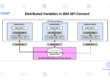
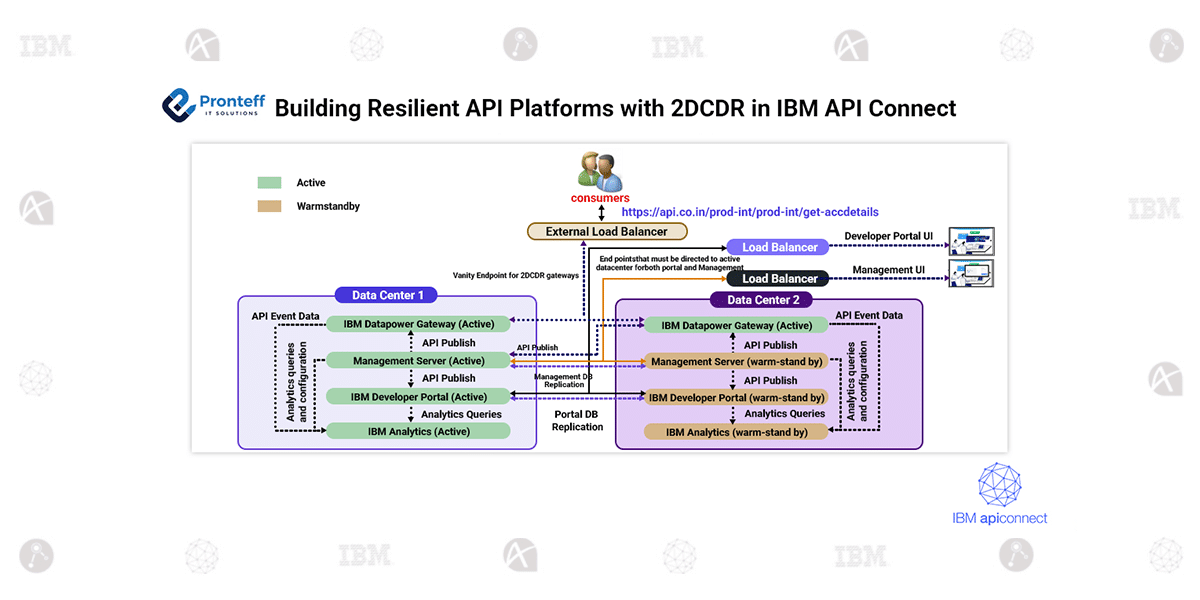
2DCDR is a warm-standby architecture where critical components such as the Management and Developer Portal are distributed across two geographically separate data centers.
In this model:
- The primary data center handles all live traffic
- The secondary data center stays continuously in sync and ready to take over
Unlike traditional backup-based approaches, 2DCDR keeps the standby environment almost production-ready at all times. This significantly reduces recovery time and minimizes operational disruption.
How Warm-Standby Works
In a warm-standby setup, data is continuously replicated between the two sites:
- Management subsystem → asynchronous replication
- Portal subsystem → synchronous replication (with strict latency requirements)
Compared to cold standby models that rely on periodic backups, this approach ensures the standby environment is always up to date.
This translates to:
- Faster recovery during outages
- Minimal data loss
- Continuous API availability
Key Architecture Highlights
- Active + Warm Standby Setup
The primary handles live traffic, while the secondary remains ready for controlled failover - Gateway High Availability
Multiple instances of IBM DataPower Gateway ensure reliable, high-throughput API processing - Manual Failover Strategy
Controlled switchover helps avoid split-brain scenarios and ensures data integrity - Latency Consideration
Inter–data center latency should be ≤ 80 ms for stable replication - Deployment Consistency
Both environments must remain identical to ensure seamless failover - Enterprise-Grade Foundation
Built on IBM API Connect, enabling secure and scalable API lifecycle management
Why Organizations Choose 2DCDR
Organizations adopt 2DCDR when downtime is simply not an option:
- Near-Zero Recovery Time (Low RTO)
Standby systems are already synchronized and ready - Minimal Data Loss (Low RPO)
Continuous replication ensures near real-time consistency - Built-in Business Continuity
APIs remain available even during data center failures - Always-Ready DR Environment
No dependency on backups or delayed recovery processes - Controlled & Auditable Failover
Manual switching provides predictability during critical events
2DCDR vs Other DR Strategies
| Model | Recovery Speed | Cost | Complexity | Data Loss |
| Cold Standby | Slow | Low | Low | High |
| 2DCDR (Warm) | Fast | Medium | Medium | Low |
Key Insight:
2DCDR strikes the right balance between resilience, cost, and operational control—making it a preferred choice for modern API platforms.
Key Considerations Before Adoption
While powerful, 2DCDR requires disciplined implementation:
- Operational Complexity
Requires careful planning for deployment, upgrades, and synchronization - Network Dependency
Reliable, low-latency connectivity between data centers is critical - Failover Readiness
Teams need proper runbooks and regular disaster recovery drills - Extended Components
Analytics and supporting services may need additional HA design
When Should You Use 2DCDR?
2DCDR is a strong fit when:
- APIs support mission-critical operations
- Downtime directly impacts revenue or customer experience
- Data consistency is more important than instant failover
- Regulatory or compliance requirements demand robust DR
- You need a balance between cost and high availability
Service Provider Value Perspective
From a service provider standpoint, 2DCDR delivers clear business value:
- Enables strong SLA commitments
- Reduces risk of prolonged outages
- Provides predictable and repeatable DR processes
- Builds customer trust through reliability
- Simplifies DR testing and compliance readiness