

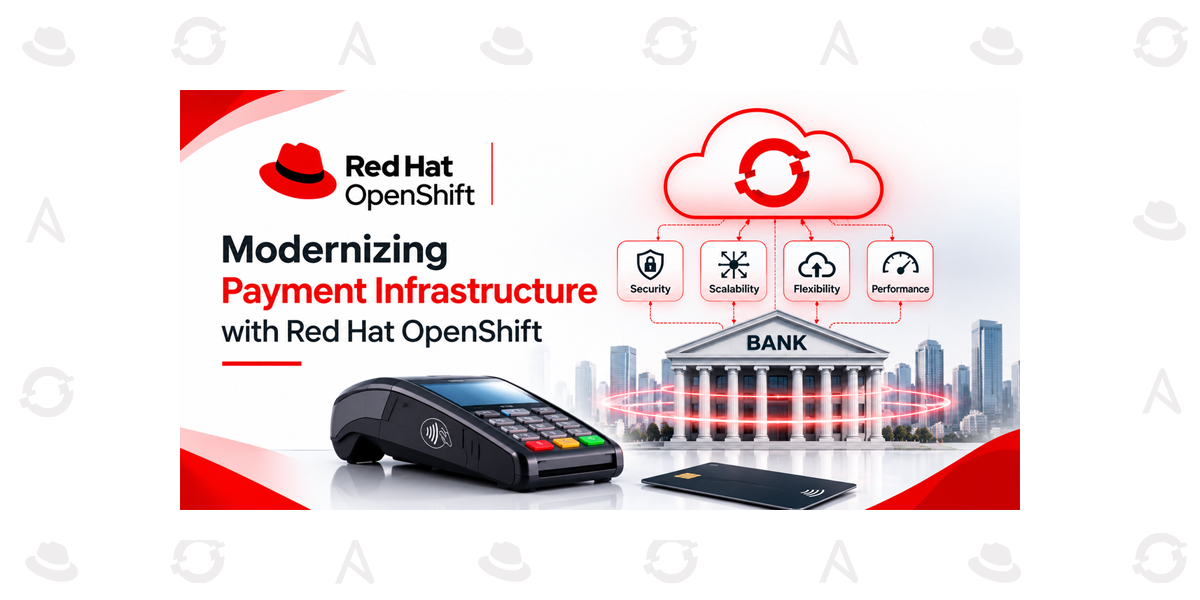
Modernizing Payment Infrastructure with Red Hat OpenShift and ACI Connetic
A payment transaction may take only seconds to complete, but the infrastructure behind it must handle growing transaction volumes, maintain availability, meet regulatory requirements, and support changing customer expectations without disrupting banking operations.
For financial institutions, modernizing payment infrastructure is no longer simply about adopting new technologies. It is about building an environment that can scale with demand, support digital banking innovation, and maintain operational stability.
Traditional payment systems often rely on complex infrastructure and rigid deployment models. These limitations can make it difficult to scale processing capacity, introduce new services, or respond quickly to business requirements.
This is where cloud-native platforms and modern payment solutions become important. The combination of ACI Connetic and Red Hat OpenShift provides financial institutions with a flexible foundation for modernizing payment processing while retaining control over their infrastructure and operational requirements.
Why Payment Modernization Matters for Financial Institutions
Payment infrastructure sits at the heart of banking operations. As digital transactions continue to grow, financial institutions must support increasing transaction volumes without compromising performance, security, availability, or customer experience.
However, legacy payment environments can introduce several challenges.
- Limited Scalability: Traditional infrastructure may make it difficult to expand payment processing capacity as transaction volumes increase.
- Infrastructure Complexity: Managing multiple infrastructure environments can increase operational overhead and create inconsistencies across deployments.
- Slow Innovation: Rigid architectures can delay the introduction of new payment services and digital banking capabilities.
- Regulatory Requirements: Banks must maintain control over infrastructure, security, and compliance requirements while evolving their technology environments.
- Operational Risks: Replacing existing payment systems entirely can be expensive, time-consuming, and introduce significant business disruption.
Modernizing payment infrastructure requires more than migrating applications to the cloud. Financial institutions need an architecture that supports gradual transformation while continuing to operate critical payment services.
Red Hat OpenShift and ACI Connetic: A Modern Approach to Payment Processing
ACI Connetic is a cloud-native payments platform designed to support payment modernization across multicloud environments.
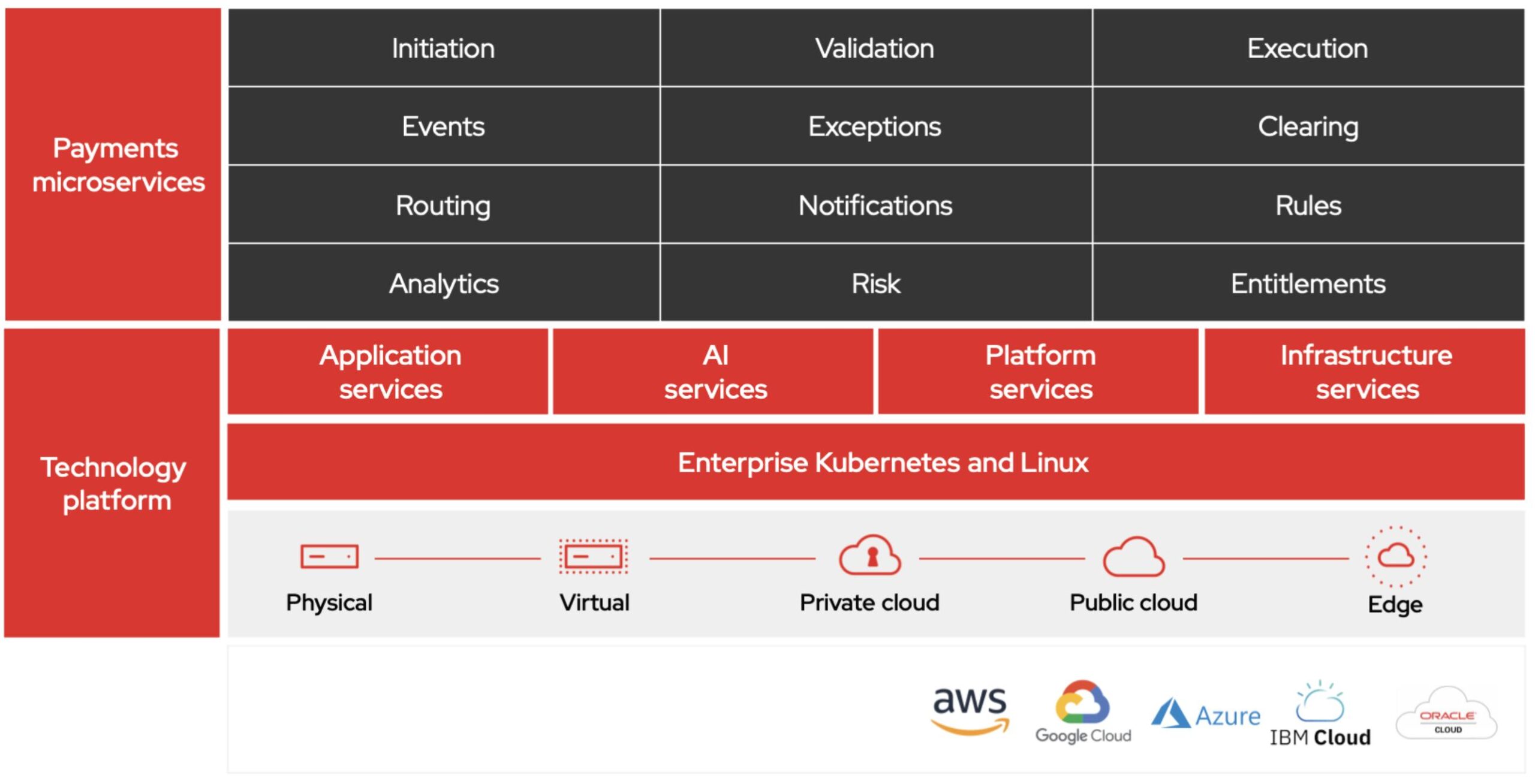
When deployed with Red Hat OpenShift, ACI Connetic leverages a consistent Kubernetes-based foundation for running payment workloads across public cloud, private cloud, and hybrid cloud infrastructures.
This combination enables financial institutions to modernize payment operations while maintaining flexibility in infrastructure deployment, operational management, and their broader technology strategy.
Key Partnership Milestones
- 2023: Red Hat and ACI announced their collaboration, focusing on payment modernization and cloud deployment flexibility.
- 2024: ACI joined the Red Hat partner ecosystem to support the deployment of its enterprise payments platform across cloud infrastructures.
- 2026: ACI Connetic achieved Red Hat Partner Validation on Red Hat OpenShift, providing organizations with additional confidence in the joint solution.
This collaboration reflects the growing importance of open, flexible, and cloud-native technologies in financial services.
Key Benefits of Modernizing Payment Infrastructure
1. Flexible Deployment Across Cloud Environments
Financial institutions have different infrastructure requirements depending on their operational, regulatory, security, and business needs.
Red Hat OpenShift provides a consistent application platform across public cloud, private cloud, and hybrid cloud environments. With ACI Connetic, banks can align payment platform deployment with their existing infrastructure requirements while retaining the flexibility to evolve their technology landscape.
This flexibility allows organizations to make infrastructure decisions based on business priorities rather than being constrained by rigid deployment models.
2. Consistent and Scalable Payment Operations
Payment systems must accommodate increasing transaction volumes while maintaining performance and availability.
Red Hat OpenShift provides a Kubernetes-based platform that helps organizations deploy, manage, and scale applications consistently across different environments.
This creates a foundation for financial institutions to adapt their payment infrastructure as transaction volumes grow and business requirements change, without having to redesign their entire application environment for every infrastructure transition.
3. Modernization Without Disrupting Existing Systems
Replacing an entire payment infrastructure at once can introduce significant cost, complexity, and operational risk.
For financial institutions, critical payment services cannot simply be taken offline while modernization takes place.
A phased modernization strategy provides a more practical approach. Organizations can introduce new capabilities gradually while continuing to operate existing systems and critical business processes.
ACI Connetic and Red Hat OpenShift support this modernization approach, helping banks manage migration complexity and move toward modern payment infrastructure without requiring an immediate, complete replacement of their existing environment.
4. Improved Operational Consistency
Managing payment applications across multiple infrastructure environments can create operational challenges. Differences in deployment processes, management practices, and environments can increase complexity for IT teams.
Red Hat OpenShift helps standardize application deployment and management through a consistent Kubernetes-based platform.
By establishing a common application platform across environments, financial institutions can improve operational consistency and simplify the management of payment workloads.
5. Supporting Regulatory and Resilience Requirements
Financial institutions operate in highly regulated environments where infrastructure decisions must align with security, compliance, risk management, and business continuity requirements.
Flexible deployment options allow banks to choose infrastructure approaches based on their regulatory obligations, internal policies, and operational priorities.
This is particularly important for mission-critical payment services, where infrastructure decisions must balance modernization goals with the need to maintain stability, control, and resilience.
Cloud flexibility should not replace governance. Organizations must ensure that their deployment architecture, operational practices, and risk controls continue to meet their specific requirements.
6. Building Infrastructure for Future Innovation
Payment technologies continue to evolve. Real-time payments, digital banking services, increasing transaction volumes, and emerging AI-driven capabilities are changing the expectations placed on financial infrastructure.
A modern cloud-native foundation helps financial institutions prepare for these evolving requirements.
Red Hat OpenShift provides a platform that supports ongoing application modernization and changing business demands, allowing organizations to build on their infrastructure over time instead of treating modernization as a one-time migration project.
How Financial Institutions Can Approach Payment Modernization
Modernizing payment infrastructure requires a structured approach that balances technology transformation with operational stability.
Evaluate Existing Infrastructure
Identify limitations in legacy payment applications, infrastructure capacity, deployment models, and operational processes. Understanding the current environment helps organizations identify where modernization can deliver the most value.
Define a Cloud Strategy
Determine whether public cloud, private cloud, or hybrid cloud deployment best supports business requirements, security considerations, regulatory obligations, and operational priorities.
Adopt Cloud-Native Platforms
Consider Kubernetes-based platforms such as Red Hat OpenShift to establish consistent application environments and support flexible deployment and management across infrastructure.
Modernize in Phases
Introduce new payment capabilities gradually instead of replacing the entire infrastructure at once. A phased approach can help reduce migration complexity and minimize disruption to critical payment operations.
Prioritize Resilience and Security
Ensure modernization initiatives support business continuity, risk management, security, and regulatory requirements. Infrastructure flexibility must be accompanied by appropriate operational controls.
Plan for Future Growth
Build an adaptable infrastructure capable of supporting increasing transaction volumes, evolving digital payment services, and emerging technologies.
What Should Organizations Consider Before Modernizing?
Modernizing payment infrastructure is not without challenges. Financial institutions must carefully evaluate their existing systems, migration dependencies, infrastructure choices, and operational requirements before implementing changes.
A cloud-native platform alone does not eliminate migration risks or guarantee payment service availability. Organizations should plan how existing systems will continue operating during modernization, assess their deployment requirements, and ensure that the new environment aligns with business and regulatory expectations.
A phased implementation strategy, combined with clear infrastructure planning and operational governance, can help organizations move toward modern payment environments while managing the risks associated with transformation.
The Role of Open Hybrid Cloud in the Future of Payments
The future of payment processing depends on infrastructure that can adapt to changing customer expectations, regulatory requirements, transaction volumes, and technological developments.
The combination of ACI Connetic and Red Hat OpenShift demonstrates how cloud-native payment platforms and open hybrid cloud technologies can help financial institutions move beyond the limitations of traditional infrastructure.
Rather than treating modernization as a one-time migration project, banks can adopt an incremental approach that supports continuous improvement, operational flexibility, and long-term innovation.
By establishing a flexible cloud-native foundation, financial institutions can prepare their payment infrastructure for evolving business needs while continuing to prioritize operational stability and control.
Looking to Modernize Your Enterprise Infrastructure?
Pronteff IT Solutions helps organizations explore enterprise technology solutions and modernization strategies aligned with evolving business and infrastructure requirements.
Explore how modern enterprise platforms can support your digital transformation journey.