
Top New Features of Ansible Automation Platform 2.7
In this blog, we’ll explore the key features, improvements, and benefits introduced in Ansible Automation Platform 2.7.
Introduction
Organizations are increasingly adopting automation to improve operational efficiency, strengthen security, and accelerate digital transformation. As IT environments become more distributed and complex, enterprises need an automation platform that not only simplifies routine tasks but also supports governance, collaboration, and emerging AI technologies.
Red Hat Ansible Automation Platform 2.7 introduces a wide range of enhancements designed to help organizations scale automation more effectively. This latest release strengthens platform engineering capabilities, improves developer productivity, enhances governance, and introduces AI-powered features that prepare IT operations for the next generation of intelligent automation.
Empower Platform Engineering and Improve Developer Productivity
Platform engineering has become a critical strategy for organizations looking to standardize infrastructure while enabling development teams to work independently. Ansible Automation Platform 2.7 expands its self-service automation capabilities, making automation more accessible without compromising security or governance.
The self-service automation portal, first introduced in version 2.6, now supports deployment on both Red Hat Enterprise Linux (RHEL) 9 and RHEL 10 as well as through a Red Hat OpenShift Operator. These deployment options provide organizations with greater flexibility when integrating automation into existing environments.
Visual Execution Environment Builder
One of the most notable additions in Ansible Automation Platform 2.7 is the Visual Execution Environment Builder.
Previously, creating execution environments often required command-line expertise and multiple manual steps. The new visual interface transforms this process into an intuitive workflow that allows automation teams to build execution environments through a guided experience.
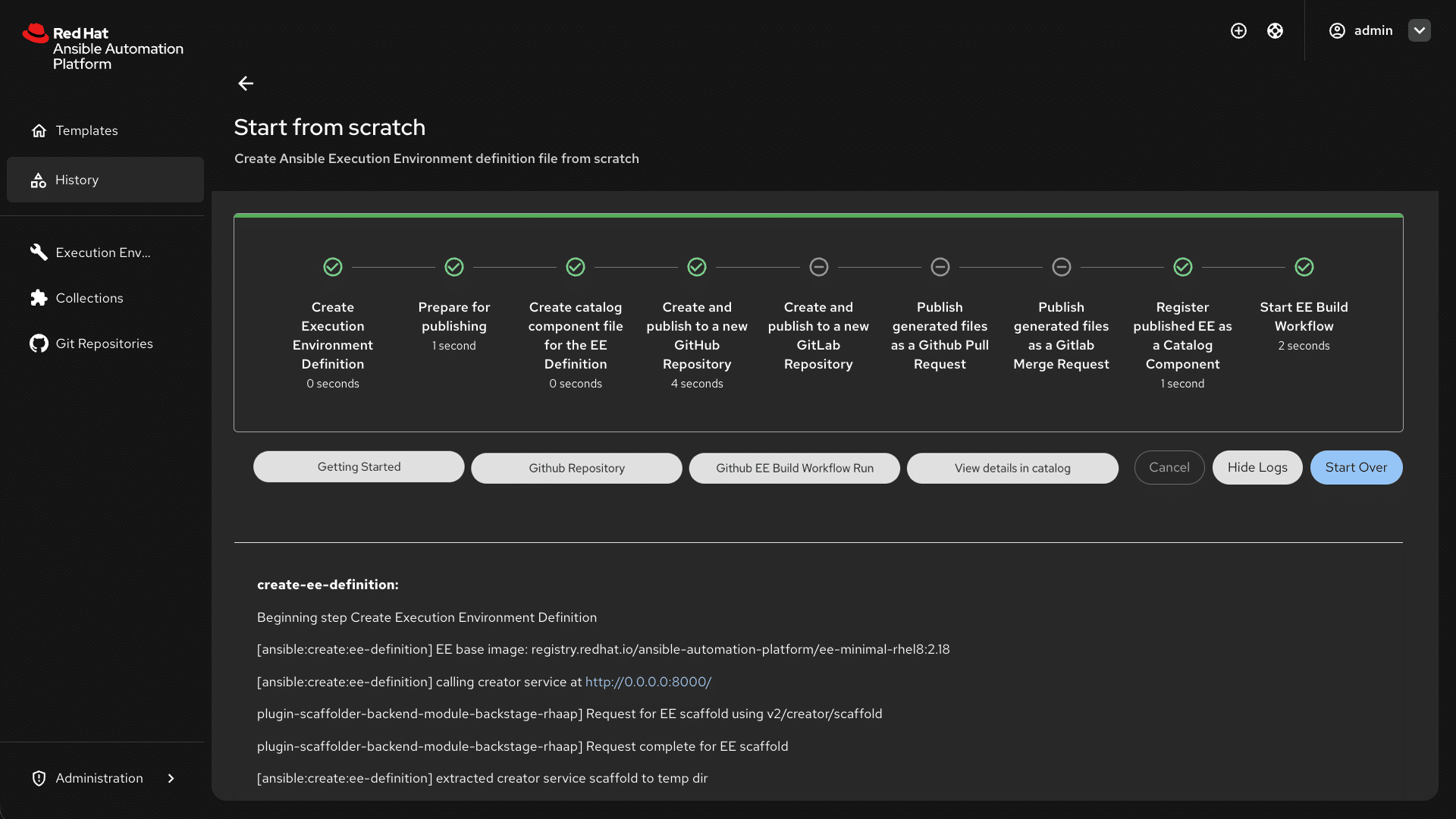
With this capability, automation developers can:
- Build execution environments using an easy-to-follow visual workflow
- Select pre-built templates or create customized environments
- Add required Ansible Content Collections
- Export configurations or push them directly to Git repositories
- Standardize execution environments across development teams
By reducing manual configuration, organizations can minimize environment inconsistencies while improving deployment reliability.
Centralized Automation Content Discovery
Managing automation assets across multiple repositories can become increasingly difficult as automation initiatives grow.
Ansible Automation Platform 2.7 introduces centralized content discovery, enabling organizations to automatically synchronize automation assets from multiple sources, including:
- Private Automation Hub
- Git repositories
- Internal automation libraries
This centralized approach allows platform teams to maintain greater visibility and control over automation content while ensuring users only access approved resources through built-in authentication and role-based access controls.
The result is improved governance, simplified content management, and better collaboration between automation teams.
Secure Browser-Based Development Workspaces
Development teams often spend valuable time configuring local environments before they can begin creating automation.
Ansible Automation Platform 2.7 addresses this challenge with Ansible Development Workspaces, providing fully configured browser-based environments that are ready to use immediately.
These workspaces offer several advantages:
- Secure cloud-based development
- Consistent development environments
- Preconfigured tools following Red Hat best practices
- Faster testing and deployment
- Centralized administration and policy enforcement
For organizations operating in regulated industries, browser-based workspaces also improve compliance by reducing reliance on unmanaged developer systems.
Enhanced AI Coding Assistant with Expanded Model Support
The automation coding assistant, previously known as Red Hat Ansible Lightspeed, continues to evolve in version 2.7.
While earlier versions primarily supported IBM watsonx Code Assistant, the platform now integrates with additional AI models including:
- Red Hat AI
- Google Gemini
- IBM watsonx Code Assistant
These expanded integrations provide automation developers with greater flexibility when generating automation code, reducing repetitive work and accelerating playbook creation.
The AI assistant helps developers write automation faster while maintaining consistency with organizational standards and best practices.
Accelerating Automation Adoption Through Better Governance
Successful enterprise automation requires more than powerful tools—it also demands strong governance and security.
Ansible Automation Platform 2.7 introduces several enhancements that simplify adoption while maintaining compliance across enterprise environments.
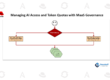
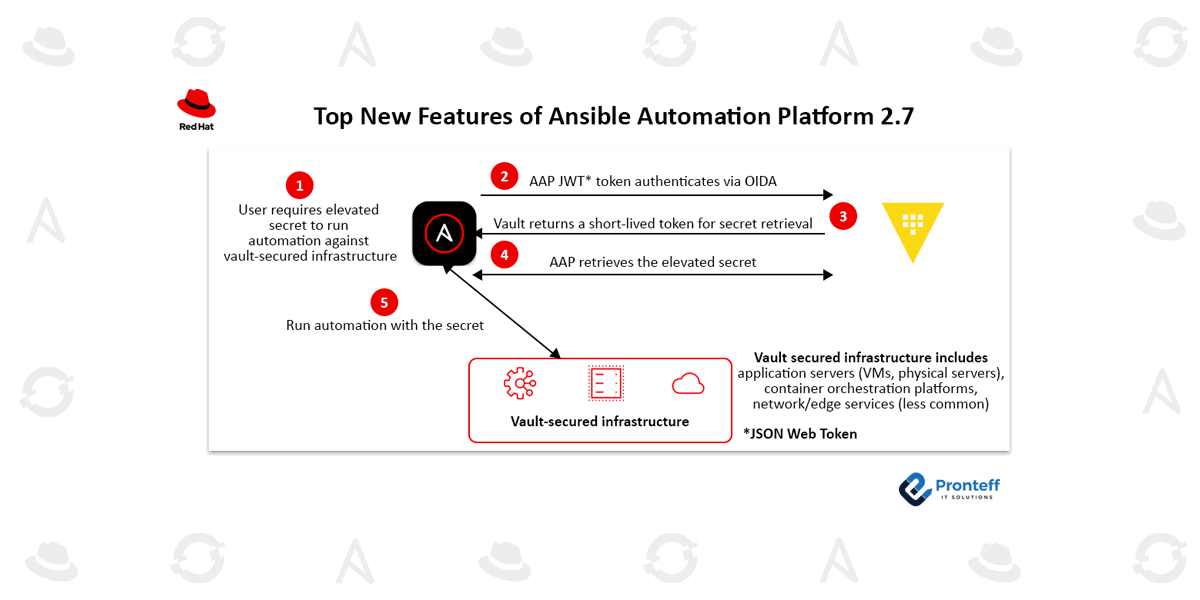
One of the most significant improvements is the introduction of native identity integration with HashiCorp Vault, enabling organizations to strengthen credential security without increasing operational complexity.
Instead of relying on long-lived service account credentials, automation jobs can now authenticate using short-lived tokens that are automatically generated for each execution. These temporary credentials are tied to specific users, jobs, and organizations before being revoked once execution completes.
This modern authentication model offers several benefits:
- Reduced exposure of privileged credentials
- Improved support for Zero Trust security architectures
- Simplified credential lifecycle management
- Enhanced auditability for compliance teams
- Stronger protection for sensitive secrets
By integrating identity management directly with automation workflows, organizations can improve security while reducing administrative overhead.